
A journey into Sardinian culture through art
The Masks series
Issohadores. Making progress
acrylic on canvas, 24″x 48″. 2025
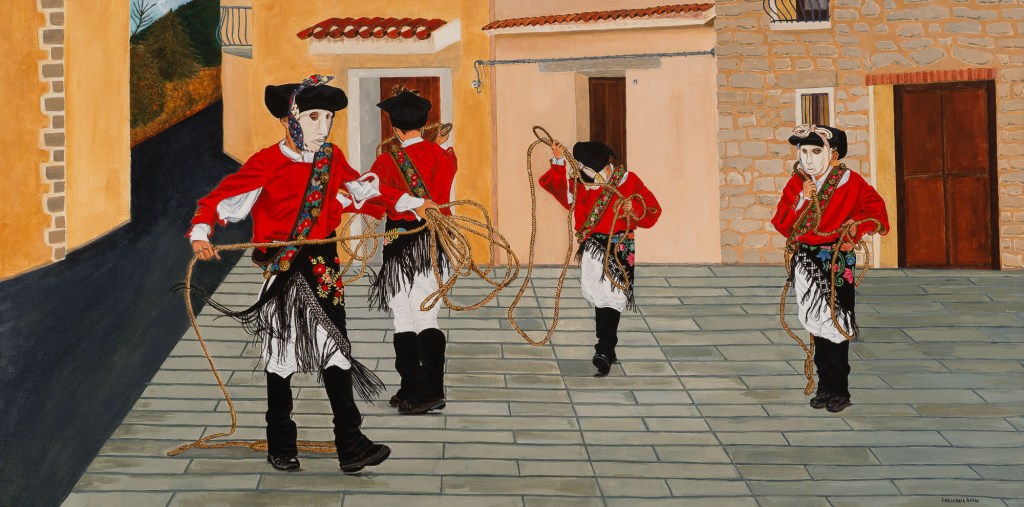
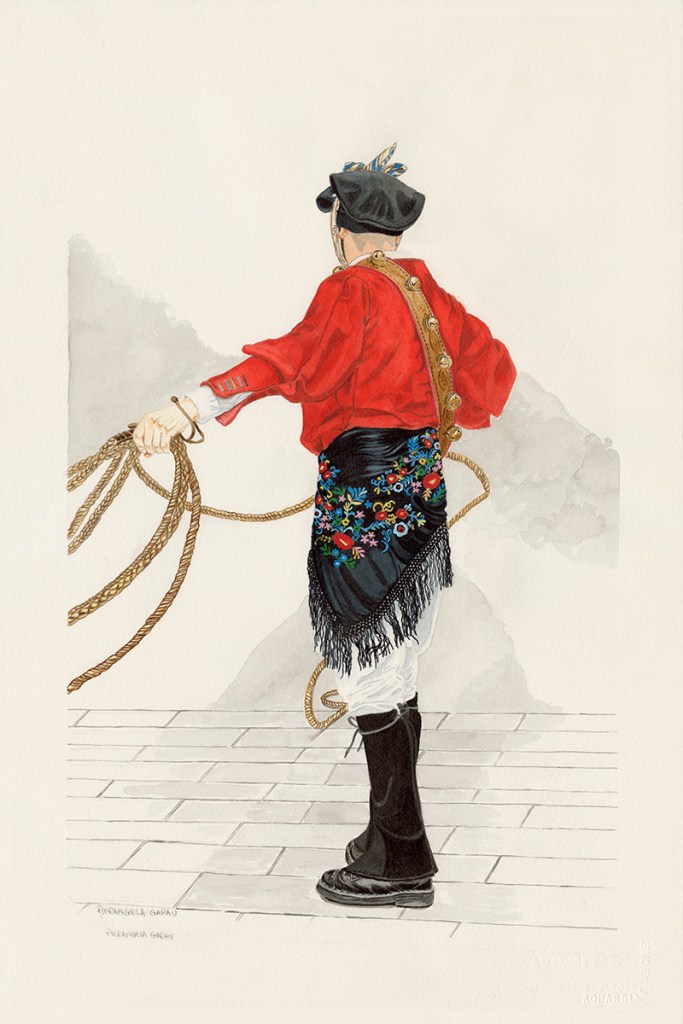
Issohadore
watercolor on paper, 15″x 22″. 2025

Sa soha. Throwing the rope
watercolor on paper, 15″x 22″. 2024
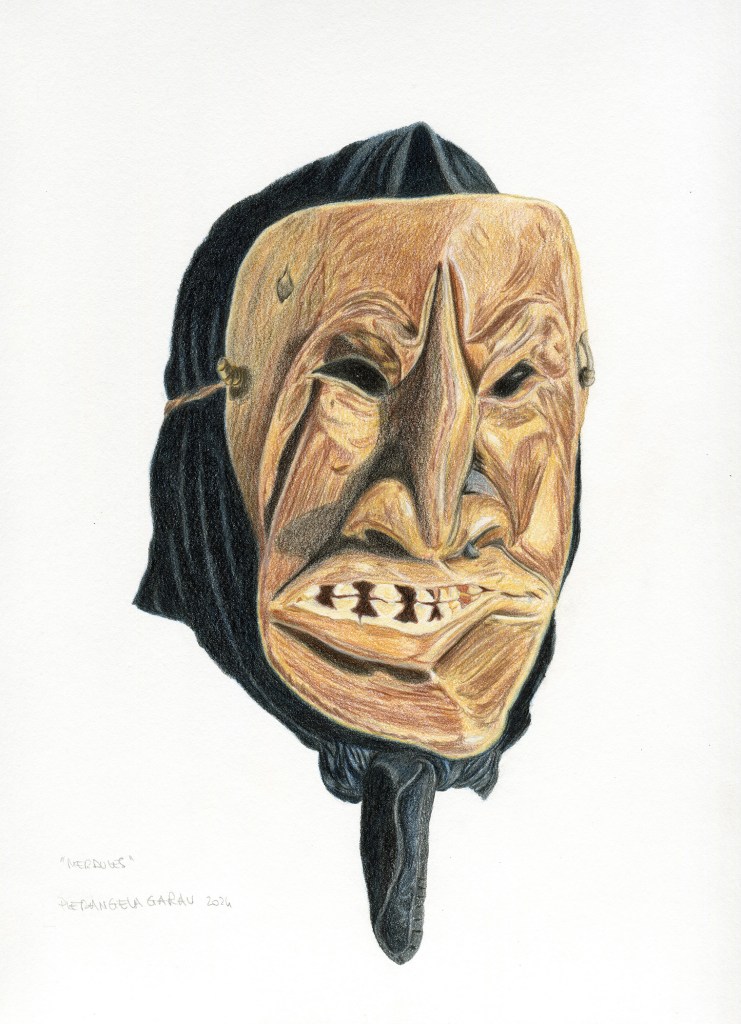
Su Boe
pencils on paper, 11″x 14″. 2024

Su Merdule
pencils on paper, 11″x 14″. 2024
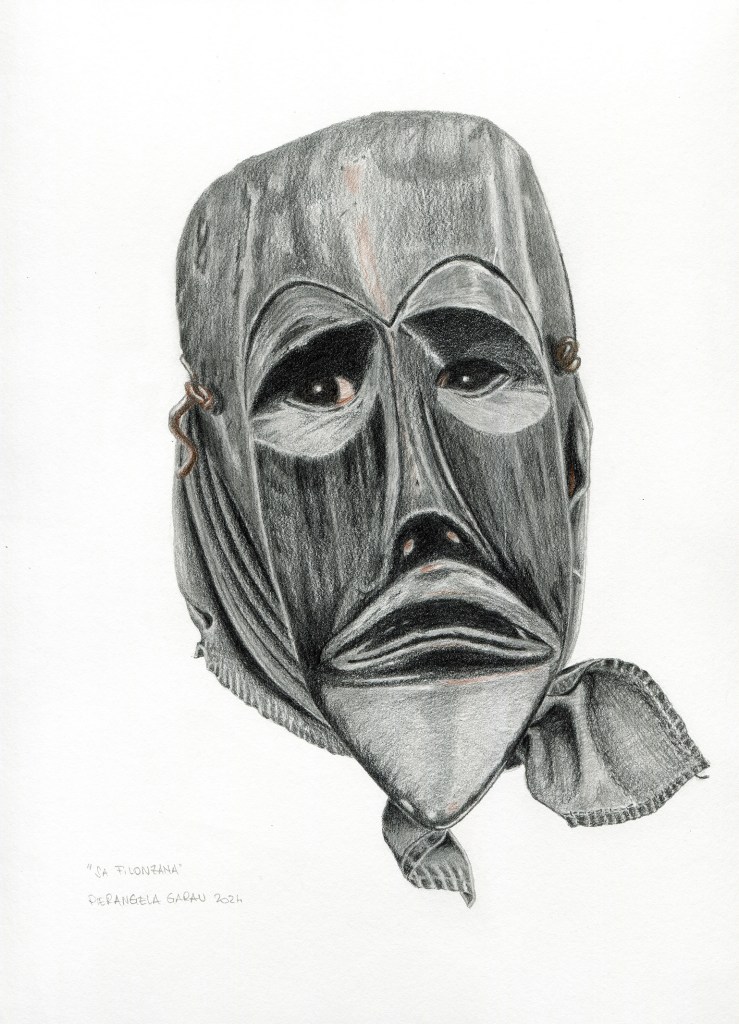
Sa Filonzana
pencils on paper, 11″x 14″. 2024
Su trimpanu
acrylic on canvas, 24″x 24″. 2024

Sos Boes
pencils on paper, 14″x 17″. 2024
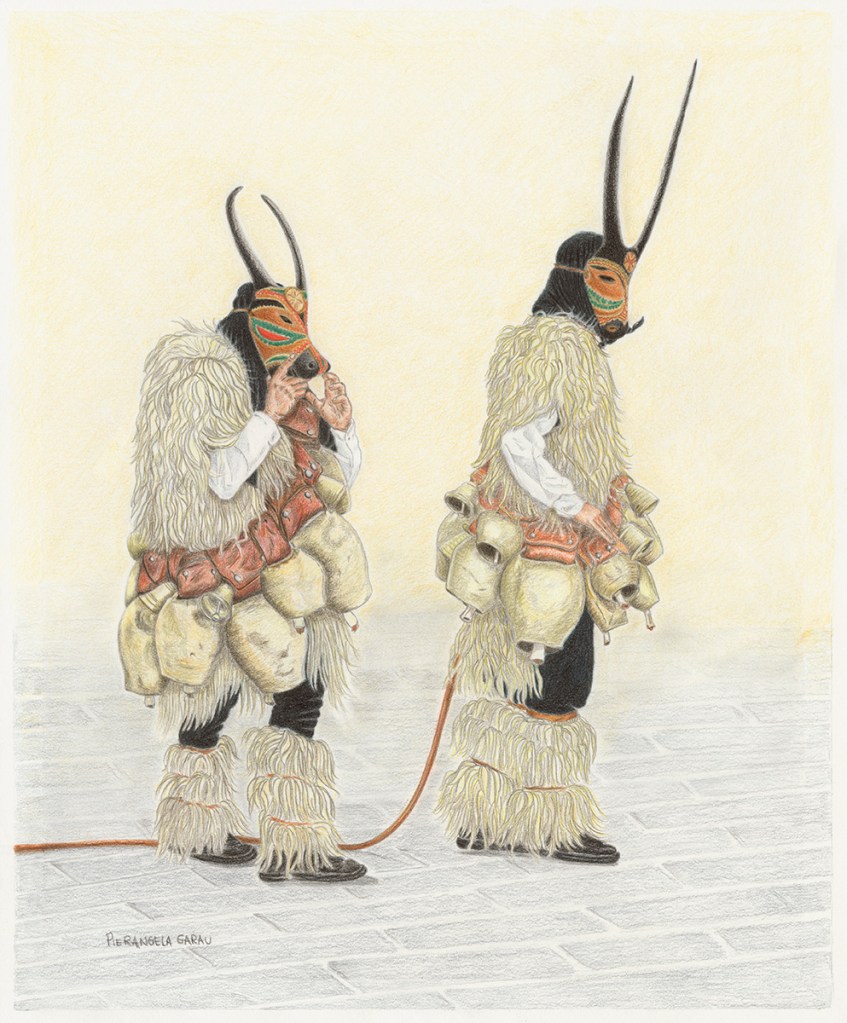
Jump
charcoal on paper, 12″x 18″. 2023

The Heritage
acrylic on canvas, 24″x 48″. 2023

Men under the mask
acrylic on canvas, 30″x 40″. 2023
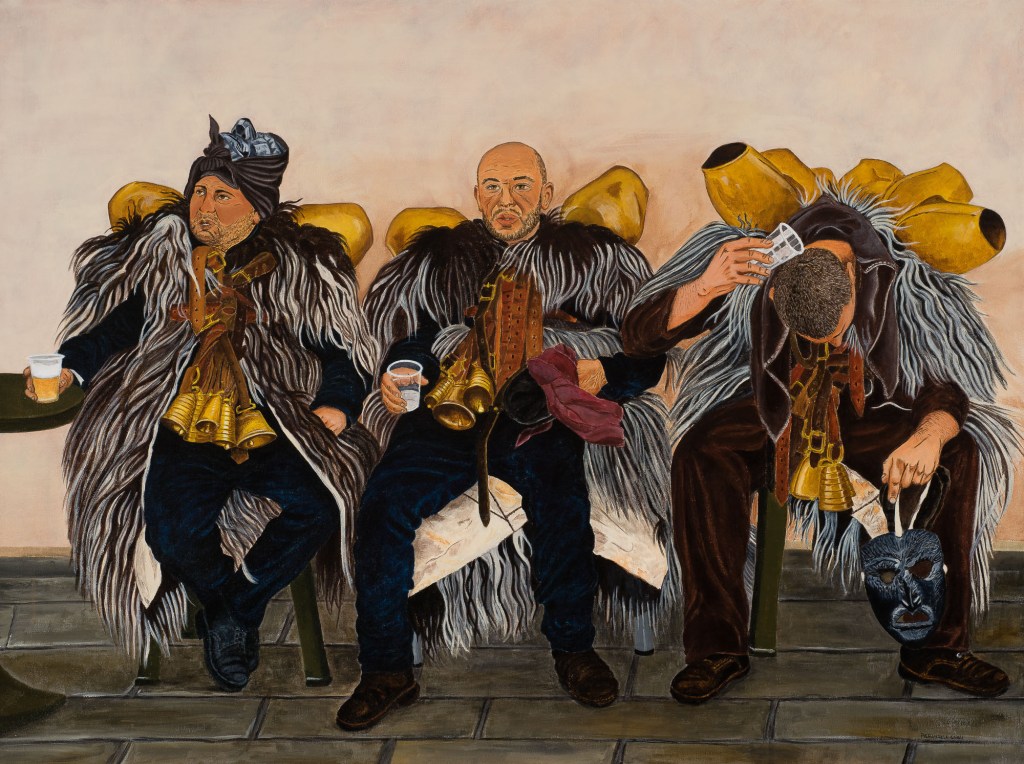
I’m proud of you
pencils on paper, 14″x 17″. 2023

Father & son
acrylic on canvas, 24″x 48″. 2023
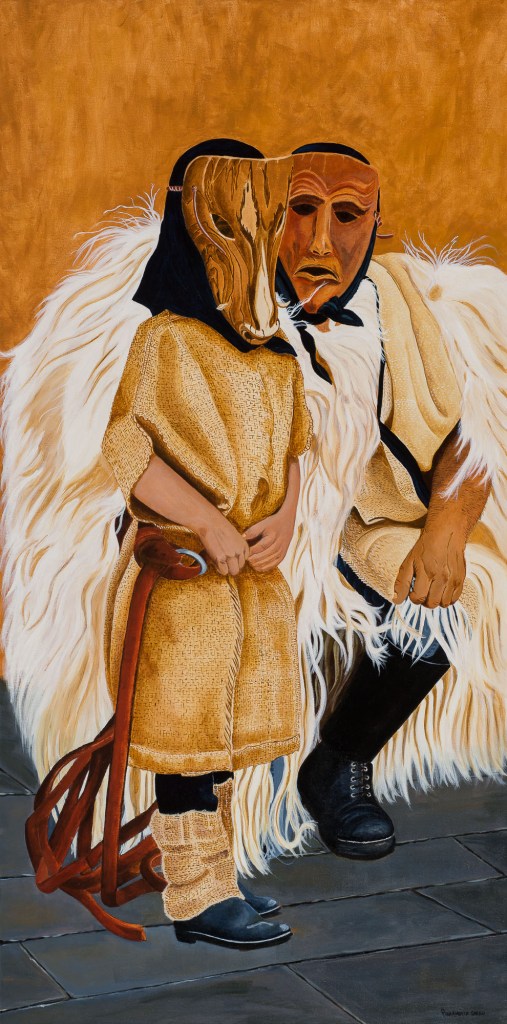
Parade
watercolor on paper 12″x 18″. 2023

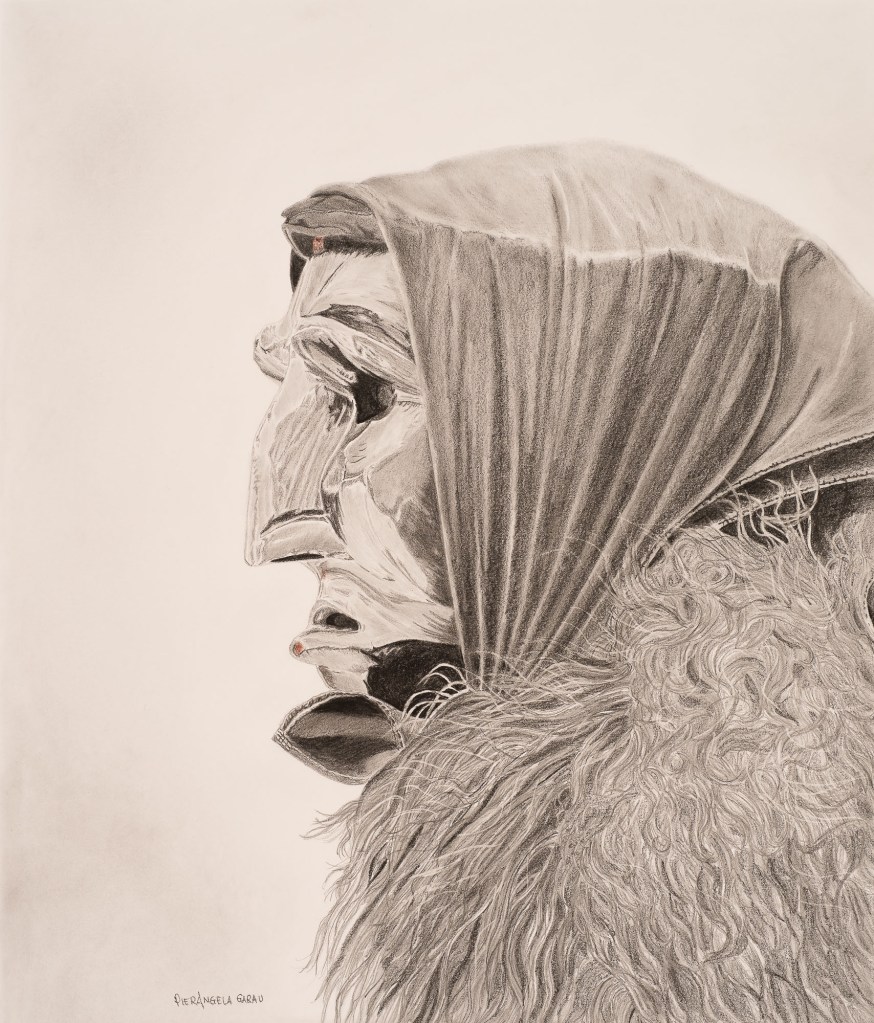
Mask
charcoal on paper, 14″x 17″. 2023
In 2019 I visited the Mamumask, an international festival of Masks in Mamoiada, Sardinia, and took many pictures during the Parade of Mamuthones, Issohadores, Boes and Merdules, Sos Thurpos, and other mysterious Sardinian masks.
I knew already these masks, but on that occasion, I was completely fascinated and I decided to start studying their characteristics and their meanings.
My interest in the masks is an opportunity to study the origin of the ancestral need, for why men wear a mask to become another thing, something different, a magical and divine entity.
This is a work-in-progress project that will include other pieces that I’m working on and additional images, videos, and materials.
Female costumes
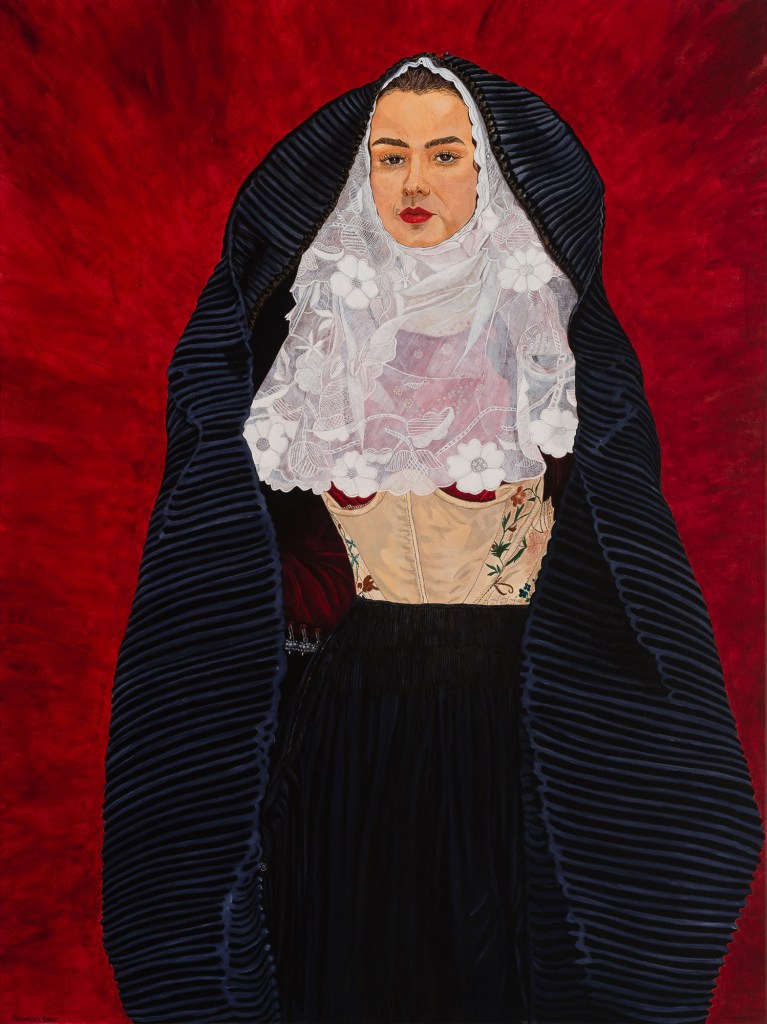

In Sardinia, there are thousands of different costumes, as many as the cities and towns that you can find in the place. In the past, the main function of dress was to identify the origin of a specified city or town, like a “flag dress” to highlight the importance of the feeling of belonging to this particular territory.
There were clothes for every aspect of life: simple for everyday use, refined and vibrantly colorful for special occasions, adorned with rich embroidery and precious jewelry, black and dignified for mourning. Despite differing in details and colors, costumes do have common features. Women wear a veil, hood, or scarf with long, pleated skirts and embroidered aprons made with silk and brocade.
Today, the costumes are worn only for special occasions, such as processions, festivals generally in honor of their patron saint, and tourist events to identify and carry the village or city flag high, but it is above all linked to the function of defining a single ethnic identity, the Sardinian one, despite the varied multiplicity of its local affiliations.
Each town is jealous of its traditional costume, preserving and safeguarding its historical importance. Although almost no one wears ancient costumes anymore, there are many towns in Sardinia’s interior where some elderly men and women still wear traditional costumes, just like their ancestors did 200 years ago.
